
Home city: 115 neighborhoods, one long rainy season
Awnings in Orlando, FL
Shade for bungalows near Lake Eola, newer subdivisions and busy storefronts, sized for the sun and planned for the storms that follow it.
- Free on-site estimates and measuring
- Written, itemized quote before any work
- Wall, fascia and anchoring checked on every install
Why Orlando Shade Has to Handle More Than Sun
Awnings in Orlando have two jobs that pull in opposite directions. From April into October the city regularly sits above 90 degrees, and the heat index can top 110. Then, on many of those same afternoons, a thunderstorm rolls through with heavy rain, gusty wind and lightning. An awning that only works on a calm morning is not much use here. We design every Orlando project around both halves of the day: enough coverage to cool a patio or a west-facing window, and a plan for what happens to that fabric or metal when the sky turns.
The calendar we plan around
Orlando has a humid subtropical climate with a hot, rainy season from May to late October and a mild, dry season from November through April. Average rainfall is about 51.45 inches a year, most of it falling June through September, often in short afternoon bursts that can drop several inches in an hour. That overlap matters for awnings. Fabric needs a pitch that sheds water instead of letting it pond, and a retractable unit needs to be something you will actually roll in before the 3 p.m. storm, which is why we talk through manual cranks, motors and wind sensors with almost every Orlando customer.
The dry months are the easy time to install. Scheduling a consultation in winter or early spring usually means the shade is up before the first 90-degree stretch arrives.
Hurricane season is a design question
The Atlantic hurricane season runs June 1 to November 30 and peaks around September 10, according to the National Hurricane Center. Orlando is about 42 miles inland from the Atlantic, so storms often weaken before they arrive, but Charley in 2004, Irma in 2017, Ian in 2022 and Milton in 2024 all caused damage in the city. We treat a storm plan as part of the awning, not an afterthought:
- Retractable awnings get a written stow routine, and motorized models can be paired with sensors that pull the fabric in when wind picks up.
- Fixed fabric awnings are built so the cover can come off before a named storm, leaving only the frame.
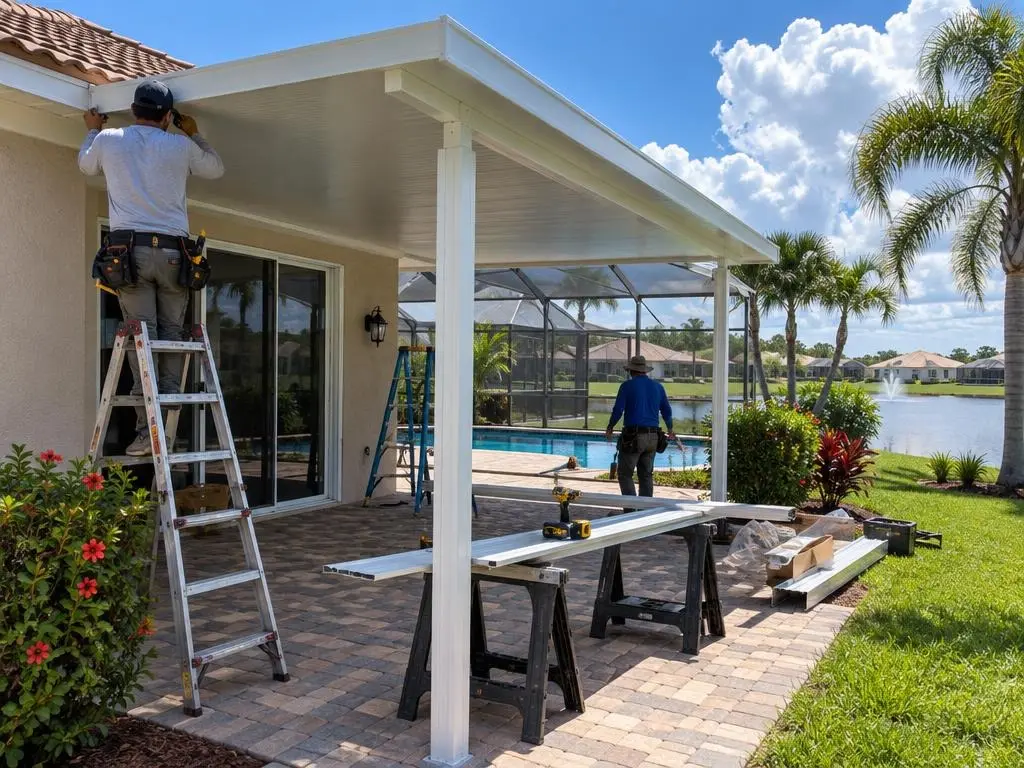
- Aluminum patio covers and awnings are attached to the structure with fastening chosen for the wall they mount to, whether that is block, wood frame or stucco over block.
One point many homeowners do not know: the Florida Building Commission has looked at retractable awnings directly. In a 2010 declaratory statement (DCA10-DEC-182), the Commission said the fabric-structure design criteria in the Florida Building Code apply to a retractable awning in both its extended and retracted positions. Retracting is still the right habit before high wind, but it does not take the product outside the code. We build to that standard rather than leaning on an owner's manual.
Older neighborhoods, historic rules
The historic core of the city runs from Lake Eola west toward Lake Lorna Doone and north into College Park, where century-old oaks line brick streets. Thornton Park, Lake Eola Heights and South Eola Heights hold some of Orlando's oldest homes, and dozens of neighborhoods near downtown went up during the 1920s land boom. The city has six historic preservation overlay districts, and exterior changes to a property inside one can go through the Historic Preservation Board for a Certificate of Appropriateness before permits are issued. If your home sits in one of those districts, we start by checking which review track applies and draw an awning that fits the house, often a simple fabric profile or a slim metal canopy that does not hide original trim.
Renters, owners and storefronts
Only about 39.5% of Orlando homes are owner-occupied, according to Census estimates, so a large share of the city's shade decisions are made by landlords, property managers and business owners. That shapes what we recommend:
- Landlords tend to want low-maintenance fixed or aluminum awnings over entries and windows that cut cooling load without moving parts.
- Owners of single-family homes often choose retractable awnings for a patio or lanai, so they get sun in January and shade in July.
- Restaurants and shops along busy corridors ask for commercial awnings that shade a doorway, protect customers waiting outside and carry the business name.
- Window and door awnings are the quickest way to cool a hot bedroom or keep rain off a side door.
- Awning repair and fabric replacement keeps an existing frame in service when the cover has faded or torn.
Permits and paperwork
The City of Orlando reviews permit plans digitally, and different construction projects need different permit types. Whether a given awning needs one depends on the type, size and how it attaches, so we confirm it for your address before work starts. Commercial projects generally take longer in review than residential ones, which is worth knowing if you are timing an awning to a grand opening. Florida law also bars a homeowners association from requiring a building permit before it reviews your plans, which lets the two reviews run side by side instead of one waiting on the other.
How an Orlando project runs
We measure the space, note which way it faces, and look at the wall or roof edge the awning will mount to. You get a written quote that lists the awning type, fabric or metal, mounting method and the storm plan. Call (689) 229-2337 to set up a visit, or
with a few photos of the area you want shaded.Orlando Facts That Shape an Awning
- Long 90-degree season. Orlando's average window for 90 F temperatures runs from April 9 to October 14, summer highs sit in the low 90s, and the heat index can exceed 110 F.
- Afternoon storms, mostly in summer. The city averages about 51.45 inches of rain a year, mostly June through September, with strong afternoon thunderstorms almost daily in the hot months that can bring several inches of rain per hour.
- Inland, but not out of reach. Orlando sits about 42 miles inland from the Atlantic. Hurricanes usually weaken before arriving, yet Charley (2004), Irma (2017), Ian (2022) and Milton (2024) all caused damage in the city.
- Mostly renter-occupied. About 39.5% of Orlando housing units are owner-occupied, and 79.5% of residents lived in the same house a year earlier, according to Census ACS estimates for 2020 to 2024.
- Six historic overlay districts. The City of Orlando has six historic preservation overlay districts, and its Historic Preservation Board offers major and minor review tracks for a Certificate of Appropriateness on changes to historic properties.
- Code applies when retracted, too. In declaratory statement DCA10-DEC-182, the Florida Building Commission said the code's fabric-structure criteria apply to a retractable awning in both the extended and retracted positions.
Orlando Questions
Do I need to take my awning down for every summer thunderstorm in Orlando?
A retractable awning should be rolled in when a storm with strong wind is coming, and in an Orlando summer that can mean most afternoons. That is why many customers here choose a motor with a wind sensor, so the fabric comes in even when nobody is home. Fixed awnings stay up through ordinary storms; for a named hurricane we recommend removing fabric covers.
My house is in Thornton Park. Can I still add an awning?
Often, yes, but if your property is inside one of the city's historic preservation overlay districts, the exterior change may need a Certificate of Appropriateness. We check the district first and propose a design that suits the house before anything is filed.
Does retracting an awning before a hurricane mean it does not have to meet the building code?
No. The Florida Building Commission has said the code's fabric-structure criteria apply to a retractable awning whether it is open or closed. Stowing it before high wind is good practice, but the awning and its mounting still need to meet the design standard.
When is the best time to book an awning in Orlando?
The dry season, November through April, is the easiest window. Installing then means the shade is in place before the long run of 90-degree days that usually starts in April.
Free Estimates in Orlando, FL
Free written estimates anywhere in Orlando.
Awnings Near Orlando
- Awnings in Winter Park, FL
- Awnings in Maitland, FL
- Awnings in Altamonte Springs, FL
- Awnings in Casselberry, FL
- Awnings in Longwood, FL
- Awnings in Kissimmee, FL
- Awnings in Celebration, FL
- Awnings in Davenport, FL
- Awnings in Windermere, FL
- Awnings in Winter Garden, FL
- Awnings in Ocoee, FL
- Awnings in Lake Mary, FL
- Awnings in Sanford, FL
- Awnings in Oviedo, FL
- Awnings in Winter Springs, FL
- Awnings in Clermont, FL
- Awnings in Apopka, FL